By Craig Hogan & Rudy Zavala
Hogan Zavala Group | Engel & Völkers Chicago
Word Count~915 words | Estimated Read Time 4 minutes
For decades, we’ve watched Fulton Market and the greater West Loop evolve in real time — long before the headlines felt inevitable. We first began selling real estate in this area when many buyers didn’t quite know what to make of it. Back then, Fulton Market was still defined by its industrial roots — gritty, functional, and far removed from the polished lifestyle destination it has become today.
Fast forward to now, and it’s hard to overstate the shift.
Fulton Market and the West Loop have emerged as one of the most dynamic and desirable neighborhoods in the entire Chicago market — a place where historic warehouses, Michelin-level dining, tech offices, boutique hotels, and luxury residential living now coexist in a way that feels both modern and unmistakably Chicago.
And if a new proposal now moving through City Hall gains approval, this neighborhood’s next chapter could be even bigger.
A Neighborhood That Has Grown Up — and Up
A new report from Crain’s Chicago Business highlights a proposed apartment high-rise that could open the door to Loop skyscraper-scale buildings in the Fulton Market District. It’s the kind of story that gets the attention of developers, investors, city planners — and frankly, anyone paying attention to the future of downtown Chicago.
The debate is already creating friction between Fulton Market’s new alderman and the city’s planning department, with implications that go far beyond a single building. The project also raises questions about future development strategy and even the long-term impact on a city program that has generated tens of millions of dollars for South and West Side neighborhoods.
This is not simply a zoning story. It’s a potential turning point.
All Eyes on Feb. 19: A Vote That Could Shift Fulton Market’s Future
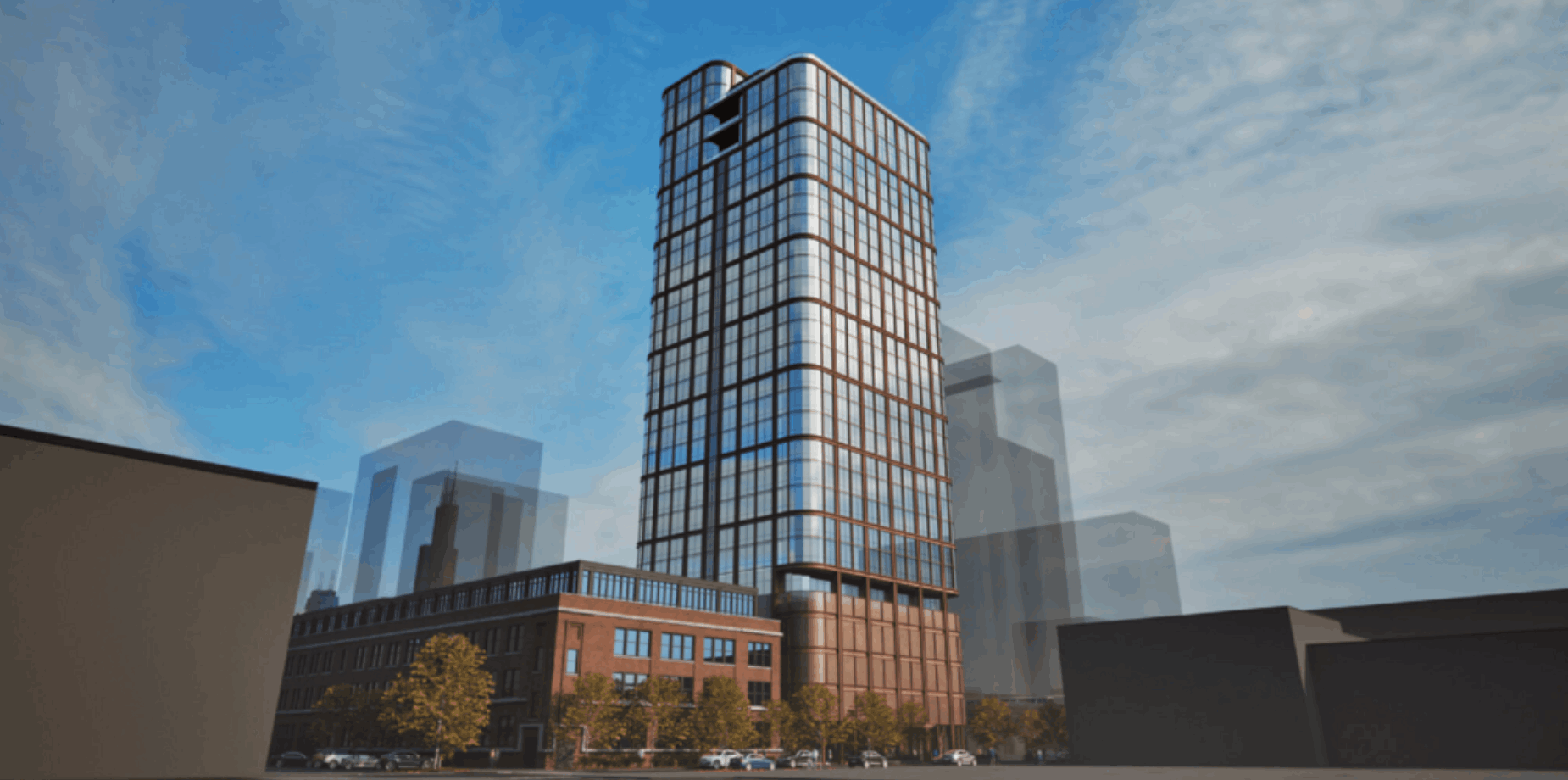
Credit: Archeo Design Studio. A rendering of the proposed apartment building at 215 N. Racine Ave.
One important point: this isn’t a finalized green light yet — it’s a major proposal that is headed for a vote.
According to Crain’s Chicago Business, the following is scheduled for consideration:
“Slated for a vote during the Feb. 19 Chicago Plan Commission meeting is a 29-story, 347-unit residential building proposed at 215 N. Racine Ave. in the former meatpacking district.”
— Crain’s Chicago Business
The proposed project would bring a 29-story, 347-unit residential building to 215 N. Racine Avenue, backed by a venture of Chicago-based Domus Real Estate Group.
If approved, the bigger story is what it could signal: the possibility that Fulton Market could soon support development at a scale previously reserved for the Loop — shifting the future skyline and density of one of the most successful neighborhoods in the Chicago market.
Our view? All eyes should be on this vote, because it has the potential to reshape the footprint of Fulton Market and the West Loop for decades to come.
In real estate, moments like this are where markets change direction.
The Luxury Market Has Already Arrived
Here’s what we know from experience: Fulton Market and the West Loop have already crossed a major threshold.
For years, buyers looked at this area with curiosity. Today, they look at it with urgency.
We are now seeing multiple residential sales above $4 million in the broader Fulton Market / West Loop corridor — something that would have been almost unimaginable when we first began working here decades ago. That shift tells you everything you need to know about how the market views this neighborhood today: as a true luxury destination, not a fringe “up-and-coming” pocket.
And that kind of momentum isn’t accidental.
It’s the result of lifestyle demand, walkability, proximity to downtown, and a steady stream of high-end development that continues to redefine what city living can look like in Chicago.
A Local Example: Under Contract in Days
The best proof of market strength is what happens in real time.
We recently saw it firsthand with a new listing in our Engel & Völkers Chicago office:
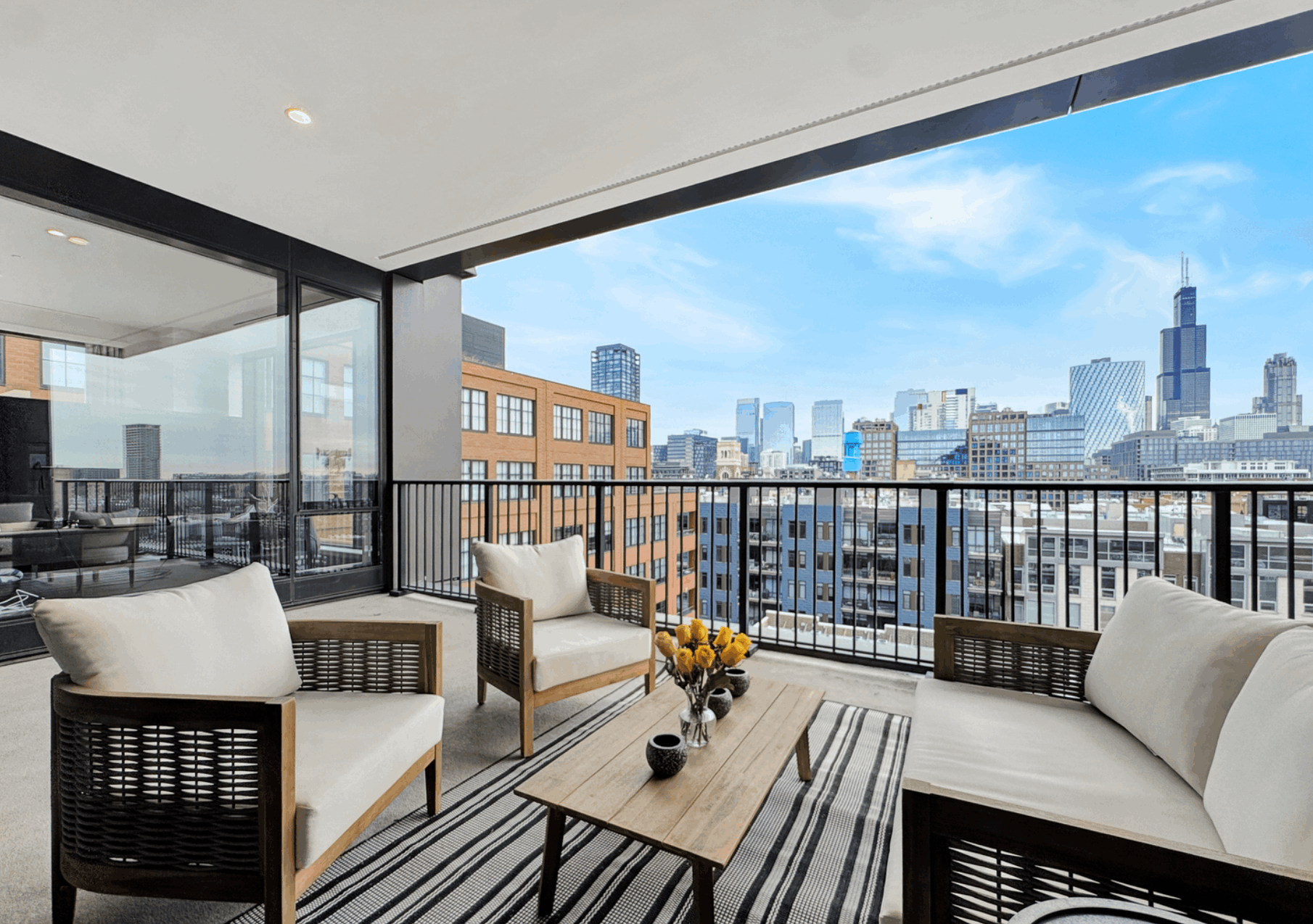

21 N May Street #802 — Chicago, IL
A spectacular residence in The Embry, one of the West Loop’s most high-profile and design-forward luxury buildings.
This property went under contract within days of hitting the market, reinforcing what we continue to see: when the right product hits the market in Fulton Market and the West Loop, buyers are paying attention — and they’re moving quickly.
This isn’t the kind of demand driven by hype. It’s driven by lifestyle, architecture, scarcity, and long-term confidence in the neighborhood’s trajectory.
What This Means for Buyers, Sellers, and the Market Ahead
Fulton Market and the West Loop are no longer just “hot neighborhoods.” They are established, premium markets — and yet they still have room to grow.
If the city begins to allow larger-scale development, the implications could be significant:
-
New inventory could reshape pricing patterns
-
Density could expand demand for retail and hospitality
-
More vertical development could push values higher in surrounding pockets
-
The skyline itself could shift westward, permanently
For sellers, this matters because perception drives value — and perception in Fulton Market is only moving in one direction.
For buyers, it reinforces what smart buyers already know: neighborhoods like this rarely go backward. The question becomes timing, positioning, and understanding which buildings and blocks will benefit most from the next wave.
Our Perspective
Having worked in this area for decades, we’ve had a front-row seat to its transformation. We’ve watched Fulton Market evolve block by block — from industrial corridors and question marks to one of the most sought-after urban lifestyle districts in the country.
The truth is: Fulton Market and the West Loop have become a blueprint for what happens when a city’s energy, investment, and lifestyle demand align.
And now, with this proposed high-rise heading toward a major vote, the neighborhood may be preparing for its next leap forward.
If you’re curious about what this could mean for your property, your investment strategy, or your next move in the Chicago market, we’re here — not as spectators, but as advisors who have been working these streets long before they were considered “prime.”
Because in neighborhoods like this, the real advantage is knowing the story before the next chapter hits the headlines.
— Craig Hogan & Rudy Zavala
Hogan Zavala Group | Engel & Völkers Chicago