
Shifting Horizons: The Mid-Year 2026 Chicago Real Estate Report
Market Interpretation, Buyer Behavior, and Neighborhood Dynamics

EXECUTIVE BRIEFING
Editor's Note: The following executive summary provides high-level takeaways from our comprehensive Mid-Year 2026 Chicago Real Estate Report. The full narrative analysis, micro-market data, and neighborhood breakdowns is available in late August. Sign up for the new Report below
Reading the Room in Chicago’s Luxury Market
The mid-year checkpoint for 2026 confirms a reality that we observe every day across Chicago’s primary neighborhoods: high-end real estate has outgrown the erratic, reactive buying frenzies of prior years. Except for a few market areas, we are navigating a mature, highly calculated market today, driven by intention.
Despite operating with substantial balance sheets, studies reveal that nearly 80 percent of those considered HNW view themselves as grounded and pragmatic at heart. They built their wealth through disciplined business ownership, finance, or executive leadership, and they carry an inherent skepticism toward market hype and speculative pricing. They evaluate real estate through a clear, practical filter: long-term value preservation, structural integrity, turnkey condition, and daily efficiency.
"Today’s buyers have options—and they are entirely willing to let a listing sit until its price aligns with reality."
When examining the data across Chicago’s core neighborhood footprints—from $600,000 attached residences in West Town to $3 million detached single-family homes in Lincoln Park—successful transactions are far from accidental. Decades of experience in this market confirm one fundamental truth: the difference between a record-setting sale and a stagnant listing comes down to reading the room, positioning the asset with complete transparency, and launching with a precise pricing strategy on day one.
The Commodity Reality: Why Patience Beats Speculation
A recent Chicago Sun-Times report highlighted the intense competition facing North Side buyers. In hyper-selective pockets, frantic buyers are paying prices that defy logic. Yet simultaneously, the exact opposite is occurring in other parts of the city. That is the nature of a commodity market, and this is a clear example of when today's buyers do not have the options that others do in other markets.
This contrast exposes a fundamental principle sellers frequently overlook: real estate is an indifferent commodity market.
The market does not care what a seller paid a decade ago, what was spent on past renovations, or that a family was raised inside those walls. Today's buyers are well-capitalized, data-literate, and completely unbothered by seller nostalgia. In all but a few market areas, when a listing launches with an unearned premium, buyers don't panic—they step back and wait for the asset to align with reality.
This is not a market to mess about in. Precision and strategy are the best advice. Whether launching a pre-war heritage asset or a contemporary infill residence, accuracy on day one remains the best path to a successful transaction.
SECTION 1: CHICAGO CORE LUXURY MARKET OVERVIEW
1.1 Macro Pricing & Inventory Dynamics
Chicago's high-end residential market continues to demonstrate remarkable stability compared to the volatility of coastal centers. Average 30-year fixed mortgage rates hovering around 6.0% to 6.2% have normalized buyer expectations, encouraging logical negotiation rather than deal fatigue. And yes, mortgage rates matter. In the $1M to $2M sector, approximately 46% to 50% of purchases are all-cash, leaving 50% to 54% financed. In the $2M to $5M sector, approximately 55% to 64% of purchases are made with all cash, while 36% to 45% use mortgages or jumbo loans.
As highlighted in recent coverage by TheStreet on homebuying decision-making, buyers across the country are facing rising price baselines and taking a far more disciplined approach to major purchases. In today's market, buyers actively resist unearned premiums, demand transparent concessions, and calculate holding costs before opening negotiations. Deep home equity and a resilient local economy mean there are virtually no distressed sales pushing values down in Chicago—the price floor remains rock-solid.
1.2 The $500K–$1.5M Attached Squeeze & Northwest Infill Velocity
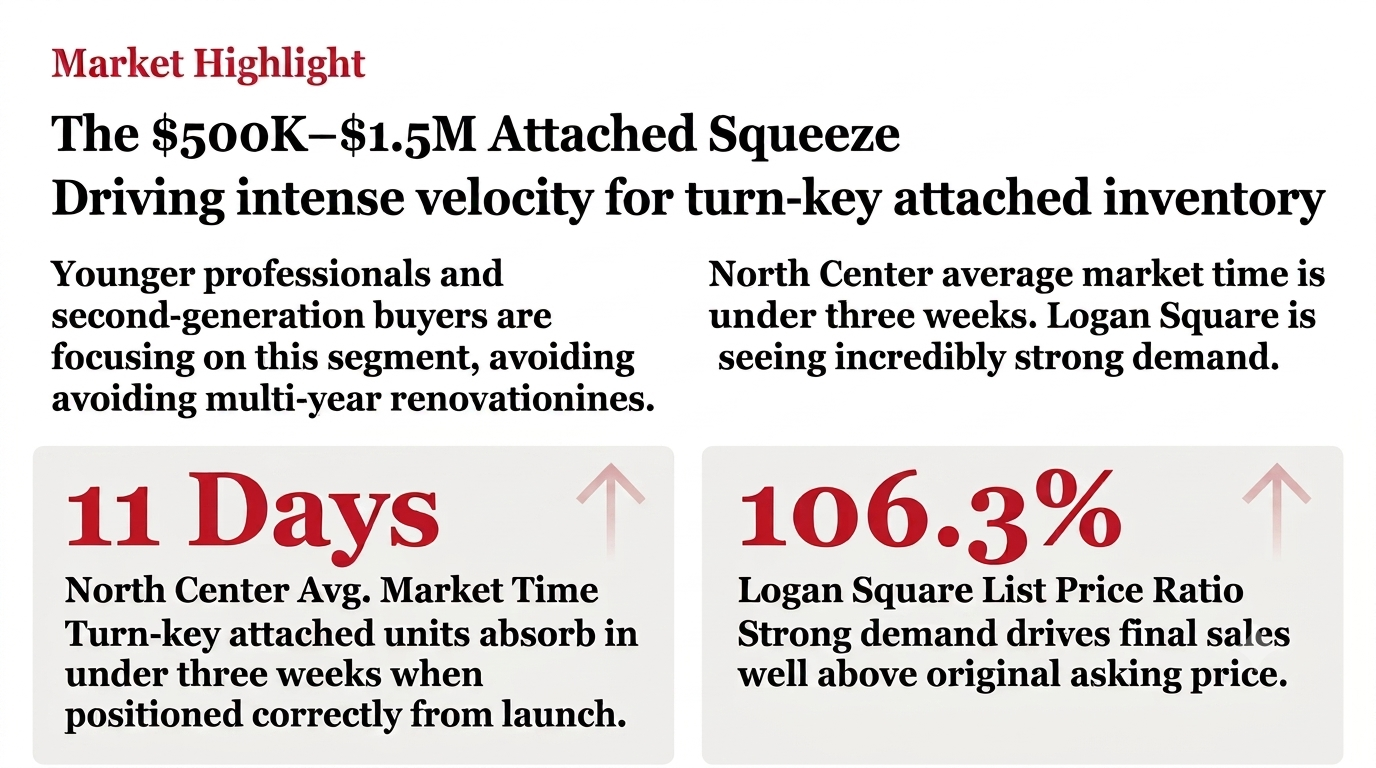
A primary driver of mid-year market velocity is occurring within the $500,000 to $1.5 million attached sector (condos, townhomes, and duplexes). A distinct wave of activity from younger professionals and second-generation buyers—the adult children of long-time clients—is meeting compressed inventory across core North Side neighborhoods and others.
This dynamic is especially acute in the Northwest Infill corridor—encompassing Bucktown, Wicker Park, Logan Square, and Avondale. These areas have officially transitioned from "trendy entry-level" to high-net-worth hubs. Bucktown's rolling median sales price crossed the $1M benchmark, with inventory sitting at a paper-thin ~0.5 to 1.1 months of supply. Because high labor and material costs make multi-year renovation timelines undesirable, move-in-ready attached units and modern wide-lot builds command immediate premiums, absorbing in under three weeks at prices well above asking.
1.3 The Two Realities: Infill Urgency vs. High-Rise Negotiability
Chicago luxury is currently operating as two distinct markets:
-
Infill Supply Markets: In core enclaves like Lincoln Park, Lakeview, and Bucktown, single-family and rowhome land footprints are strictly capped. Driven by buyers prioritizing selective-enrollment school boundaries (e.g., Lincoln, Mayer, Burley) and multi-generational capital preservation, turnkey detached homes absorb in a matter of days.
In these pockets, buyers routinely pay an immediate premium to avoid multi-year renovation timelines and material friction. The numbers validate that urgency: Lincoln Park detached homes trade at a $2,441,667 median sales price in an average of 24 days at 100.6% of list price. Further northwest, Logan Square detached inventory surged +12.2% to a $1,397,500 median, absorbing in 31 days at 104.3% of asking price. When turnkey single-family inventory launches in these core supply-constrained corridors, capital mobilizes instantly.
- High-Rise & Vintage Core (Gold Coast, Streeterville, River North, Loop): High-rise condos and vintage co-ops dominate this sector. Ample available inventory, higher HOA fee structures, and special assessment scrutiny give buyers significantly more leverage. Instead of fast bidding wars, transactions here are marked by strategic price negotiations, cash buyers capitalizing on relative value, and longer days on market. This sector provides prestige and lakefront access at an attractive price-per-square-foot entry point compared to single-family homes.

SECTION 2: NEIGHBORHOOD-LEVEL INTELLIGENCE
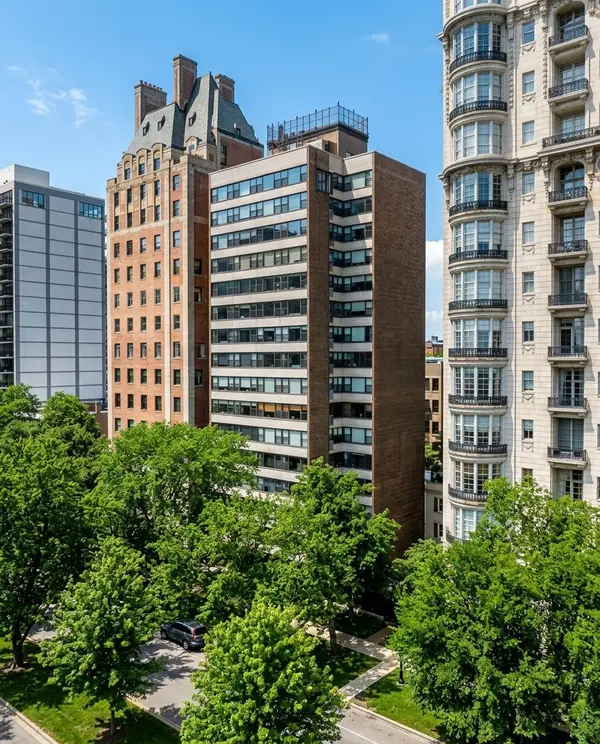
2.1 Gold Coast: Architectural Heritage & Strategic Price Resets
In historic enclaves like the Gold Coast, pre-war buildings offer classic craftsmanship—from hand-carved millwork to soaring plaster ceilings—that cannot be replicated by modern construction. Because co-op boards require strict financial vetting and high equity baselines up front, these residences remain insulated from conventional mortgage volatility.
However, even along ultra-prime corridors, resetting prices after long holding periods requires evaluating data over sentiment. Consider a recent landmark transaction on East Lake Shore Drive: an 18th-floor unit that commanded $10.37 million in 2015 recently closed for $5.2 million. While headlines focused on the price change, the market reality was structural: the 2015 acquisition included overarching penthouse roof rights. Unbundling those rights recalibrated the baseline valuation. At $5.2 million, it stands as one of the highest East Lake Shore Drive transactions this decade—confirming that capital is always available when pricing reflects exact unencumbered rights.
For a block-by-block breakdown of architectural eras, ownership mechanics, and lifestyle rhythms across Gold Coast, Streeterville, and River North, review our Near North Chicago Luxury Real Estate Guide.

Property Spotlight — 1530 N. State Parkway #12-13: Listed at $5,995,000, this 7,500-square-foot pre-war duplex cooperative reimagined by Dublin architect John O'Connell and Phil Liederbach illustrates how heritage assets hold value. Featuring a two-story limestone staircase, seven fireplaces, and a restored butler's pantry, it pairs architectural pedigree with modern infrastructure like brand-new full-building windows and private parking. Read our full private tour analysis at The Art of Permanence: Inside 1530 N. State Parkway, Duplex 12-13.
2.2 Streeterville, River North & West Loop: Commercial Capital & Building Governance
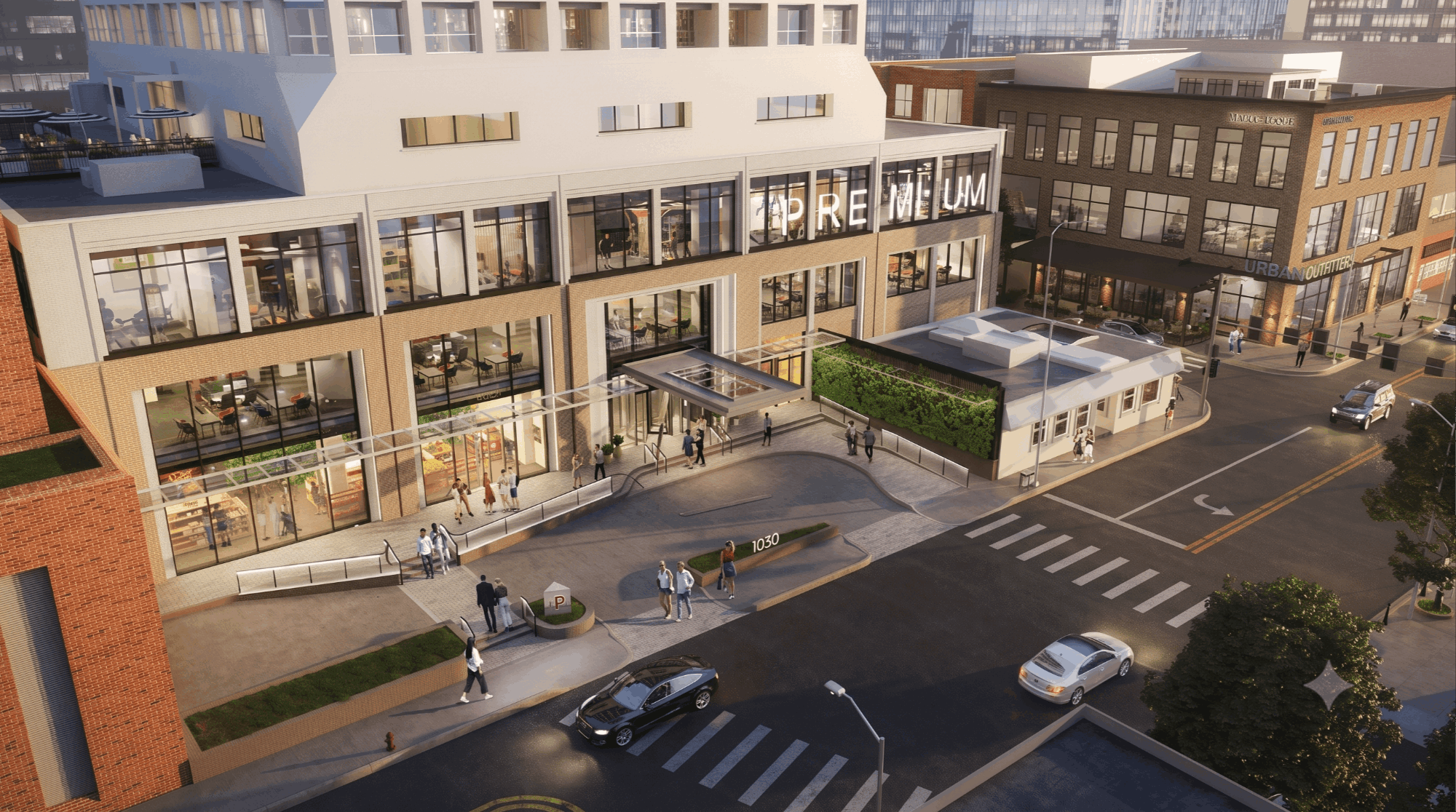
Residential values follow commercial capital. In Streeterville, River North, and the West Loop/Fulton Market corridor, corporate anchors (such as Google and McDonald's) and central-city adaptive reuse projects are re-anchoring high-density residential corridors.
- Google Thompson Center Campus: Funnels thousands of high-earning tech professionals toward the central city.
- 201 East Walton Place ($68M): City Council has approved Churchwick Partners' adaptive-reuse project to convert the former 18-story Sonesta ES Suites hotel into 221 modern residential apartments, designed by bKL Architecture, as detailed in our analysis, Turning Keys into Addresses: The Structural Shift at 201 East Walton.
- 70 E. Lake Street ($40M): Honore Properties' conversion of the 1927 Old Dearborn Bank Building into ~170 apartments.
- 19 South LaSalle Street ($64M): Landmark conversion into 175 apartments and 32 hotel rooms under Envoi Partners, as reported in the 19 South LaSalle Street Conversion Approval.
- 226 W. Ontario Street: River North Sound-Bar building conversion to 70 units with coworking amenities.
- 410 N. Elizabeth Street (Fulton Market): Tree Street Group and Magellan Development Group have broken ground on Chicago's first all-electric, geothermal 33-story residential tower. Utilizing underground geothermal loops and triple-glazed acoustics, the project cuts building energy consumption by 60%—proving that institutional capital is actively funding next-generation infrastructure in our core neighborhoods even amid tight national lending environments.
Suburban and riverfront developments are advancing in lockstep. Projects like Optima Lumina in Wilmette bring biophilic condominium density to transit hubs, while CMK’s Riverline tower at 910 S. Wells Street advances a 28-story residential rise along the riverwalk. Commercial investments such as the Newberry Plaza Retail Realignment and Lakeview Institutional Validation further anchor surrounding condo values, as supported by ABC7's coverage of the Mag Mile Retail Comeback.
Concurrently, building governance has become a core valuation filter. Updated Fannie Mae guidelines enforce strict auditing of HOA balance sheets and deferred maintenance. Review our breakdown on Fannie Mae Condo Guidelines 2026-2027 to see why healthy reserves protect resale liquidity. Furthermore, with Chicagoland apartment completions falling below 4,000 units—the lowest delivery pipeline in over a decade—and rental vacancy near 4%, turnkey high-rise real estate offers a durable wealth-stabilization strategy, a dynamic supported by broader market analysis.
2.3 The National Tax Policy Contrast: NYC Pied-à-Terre Surcharge
To understand why national capital views Chicago as an increasingly compelling destination, observe how tax policy friction is escalating across coastal luxury hubs. Under New York State legislation, New York City enacted an annual pied-à-terre tax surcharge targeting high-value non-primary residences.
Reporting from Bloomberg confirms that NYC's initial pied-à-terre tax roll included approximately 13,000 luxury second homes, generating an estimated $500 million annually through surcharges of up to 6.5%. While Manhattan's trophy assets retain global appeal, the policy introduces permanent holding-cost friction for multi-homeowners.
In contrast, Chicago offers relative property tax predictability and exceptional price-per-square-foot fundamentals. Capital naturally flows toward operational stability. For a national buyer evaluating a second or third urban footprint, Chicago’s Near North corridor delivers world-class architectural quality and cultural density without recurring non-resident penalties, an advantage detailed in our report on the New York Pied-à-Terre Tax & Chicago Real Estate Impact.
2.4 Lincoln Park, North Shore & The $17.5M Benchmark
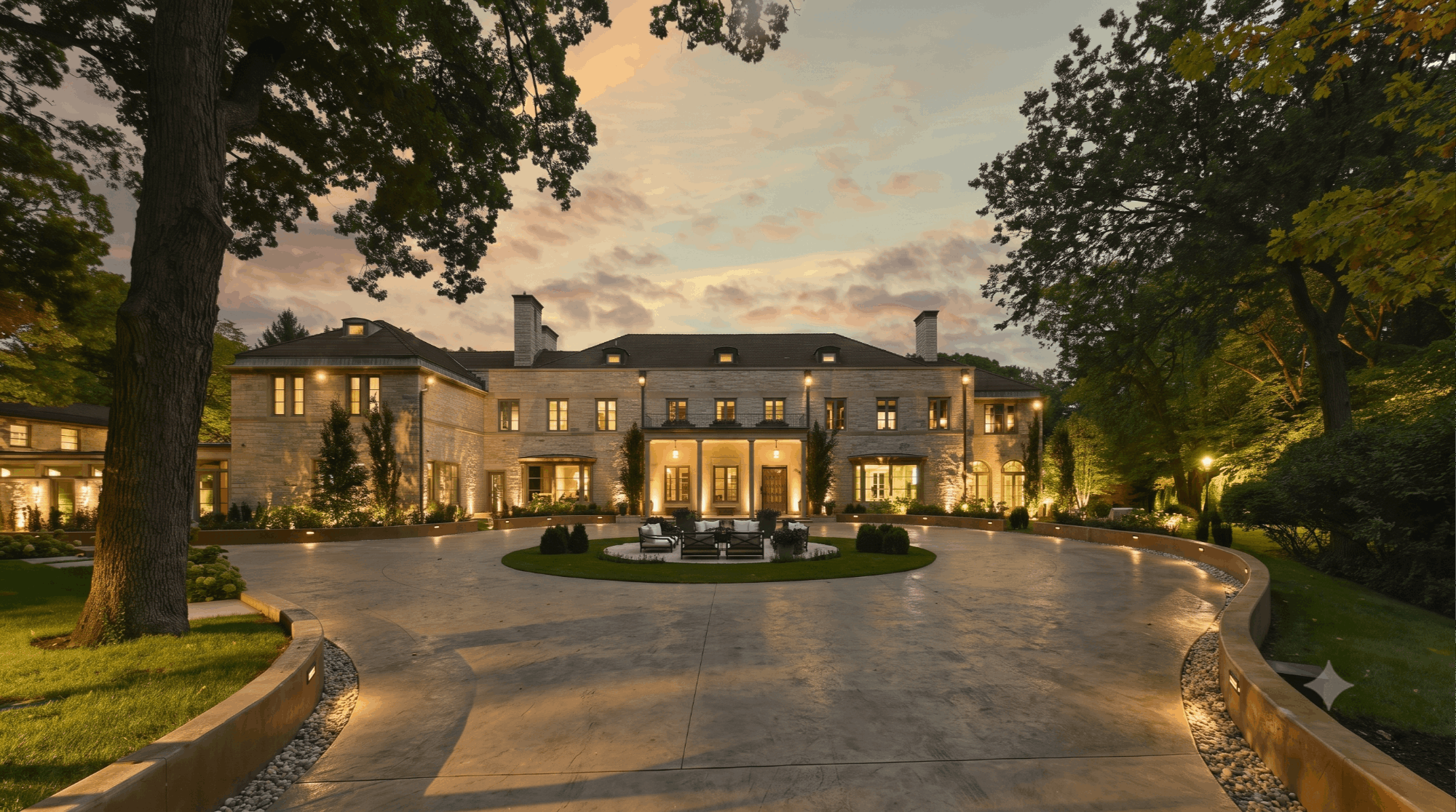
The demand for detached single-family homes across Lincoln Park, Old Town, and the North Shore (Winnetka, Wilmette, Glencoe, Kenilworth, Lake Forest) remains absolute. Lincoln Park single-family homes command a year-to-date median price of $2,545,000 (+15.7%), absorbing in an average of 24 days. The North Shore acts as the direct recipient of city luxury buyers relocating for larger lot footprints and top-tier public schools, operating at a paper-thin ~1.5 months of supply.
The regional appetite for pristine, fully modernized estate assets was dramatically validated on the North Shore with the $17.5 million closing of the historic Pabst Mansion at 443 Sheridan Road in Glencoe. Originally designed in 1936 by William Pereira for former Pabst Brewing chairman Harris Perlstein, the 20,000-square-foot Georgian estate underwent an extensive, multi-year full-gut renovation. Selling for $17.5 million—the highest price paid for a Chicago-area home so far in 2026—it proves our core belief: better costs more. When legacy architecture is paired with turnkey, state-of-the-art infrastructure, buyers respond at record levels.
SECTION 3: CROSS-MARKET ADVISORY & SECONDARY FOOTPRINTS
3.1 Portfolio Diversification: The Chicago–Coastal Corridor
High-net-worth real estate strategy is rarely confined to a single ZIP code. As Chicago buyers optimize their primary urban footprints—often trading high-maintenance square footage for turnkey efficiency—they increasingly look into secondary lifestyle markets.
We are tracking a significant shift toward international resort corridors across the globe that offer currency advantages, strong rental yields, seamless logistics, and accessible international citizenship. Today, Puerto Vallarta, Mexico has emerged as a premier secondary market for Chicago capital, driven by non-stop flight access from O'Hare and Midway and strong financial fundamentals.
Through the global reach of Engel & Völkers, we provide integrated advisory across primary residences and international secondary holdings. Whether managing beachfront villas in the Zona Romántica or evaluating fractional co-ownership platforms like Pacaso—which allow owners to hold equity without carrying 100 percent of the operational overhead—our advisory ensures your secondary portfolio is as strategically managed as your primary address.
Explore active opportunities directly at GetMeToMexico.Com or review our [Pacaso Co-Ownership Strategy Guide].
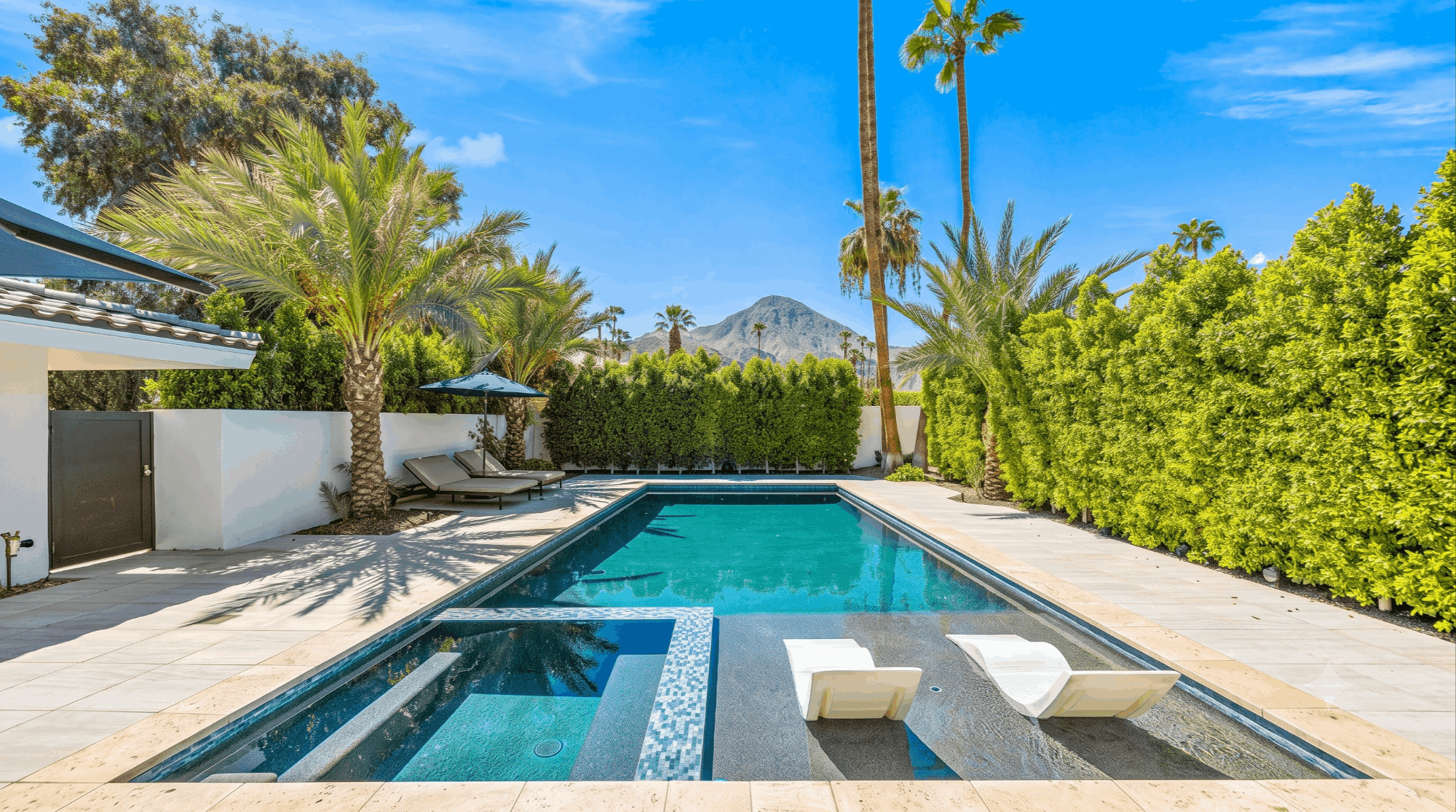
Palm View $319,000 1/8 ownership Indian Wells, CA 4bds • 4ba • 3,991sq ft available with Pacaso
SECTION 4: WEALTH TRENDS & THE EDITED LIFE
Across the national landscape, buyers are recalibrating how they define high-end real estate. The primary motivators behind residential purchases have shifted toward intangible assets: operational independence, privacy, health, family experience, and friction-free living.
The concept of "an edited life" has redefined modern living. Buyers are systematically shedding operational burdens. Sprawling estates requiring constant maintenance are frequently traded for the turnkey simplicity of a well-managed downtown residence with full concierge servicing, as we explore in our essay on Chicago Luxury Real Estate Editing Life. Interest is directed toward environments where friction is managed by professional staff, solid building infrastructure, and thoughtful governance. For many of us, this could simply mean white-glove level service in a condominium or other development in much less space than we would have ever considered in the past.

SECTION 5: STRATEGIC OUTLOOK FOR SELLERS & BUYERS
Navigating the Market
The mid-year 2026 Chicago market clearly responds to more realistic opportunities. For sellers, putting sentimentality aside and pricing to hard data on day one is essential. If a home requires cosmetic or mechanical updates, that reality must be reflected in the launch strategy. For buyers, excellent opportunities exist, but navigating the market requires distinguishing between a fairly priced turnkey asset and a listing with structural headwinds.
The properties that move efficiently over the coming months will be those offering clean turnkey presentations, transparent building governance, and clear alignment with stable neighborhood anchors. Success comes down to understanding the story behind the data, maintaining deep relationships across the brokerage community, and knowing how to guide clients through the process.

Craig Hogan & Rudy Zavala
Hogan Zavala Group | Engel & Völkers Chicago
HOGAN ZAVALA GROUP | ENGEL & VÖLKERS CHICAGO
Gold Coast | Streeterville | River North | The Loop | West Loop | Lincoln Park | Lakeview | Logan Square | South Loop | Wicker Park | Bucktown
This report is not intended for financial advice. Sources for content include: Crain's Chicago Business, Chicago YIMBY, Block Club Chicago, NAR, MRED, TheStreet, Bloomberg, and CAR market data. Designed and presented by Hogan Zavala Group | Engel & Völkers Chicago.
Categories
- All Blogs (130)
- Adaptive Reuse (2)
- Architecturally Significant (23)
- Architecture (59)
- Art (2)
- Art Collecting (2)
- Bespoke Lighting (2)
- Buena Park (1)
- buyer strategy (30)
- Career Moves (9)
- chandeliers, (1)
- Chicago HOA Fees (7)
- Chicago Luxury Real Estate (94)
- Chicago Property Taxes (4)
- closet design (2)
- Co-Ownership (3)
- Coffee (1)
- Condo Assessments (7)
- coop apartments (5)
- cooperative apartments (8)
- custom closet advice (1)
- Days on Market (16)
- Design (51)
- Fulton Market District (8)
- Gold Coast (25)
- Golden Visa Programs (10)
- Historic Homes (8)
- Hogan Zavala Group (60)
- Holiday Abroad (1)
- International Citizenship (15)
- International Real Estate (31)
- Kitchen Design (13)
- Lakeview (14)
- Legacy (3)
- LGBTQ Housing (2)
- LGBTQ+ (4)
- Lifestyle (78)
- Lighting (2)
- Lincoln Park (14)
- Loft Living (5)
- Lofts (5)
- Logan Square (4)
- loneliness & aging (2)
- Loop (2)
- Luxury Market Index (4)
- Marina Towers (4)
- Market Insights (17)
- Market Update (36)
- Mid Century (2)
- New East Side (1)
- Outdoors (5)
- Pacaso Vacation Homes (3)
- pied-à-terre (15)
- Puerto Vallarta (8)
- Puerto Vallarta Real Estate (9)
- Real Estate Agents Success (11)
- Real Estate Industry (30)
- Real Estate Legal Changes (5)
- Real Estate Transactions (7)
- ritual (4)
- River North (21)
- River West (14)
- Second Homes (9)
- Seller Strategy (28)
- Selling and Buying in Chicago (34)
- Senior Housing (2)
- Streeterville (15)
- Summer (7)
- Sustainability (7)
- Taxes (5)
- Thanksgiving Travel (1)
- The 606 (1)
- The Henrys (1)
- Travel (1)
- Trends (29)
- Trifecta (17)
- Uptown (2)
- video (1)
- video for real estate (2)
- Wellness (9)
- West Loop (9)
- Wheaton (1)
- Wicker Park | Bucktown (4)
- Wines for Summer (2)
Recent Posts






Craig Hogan | Rudy Zavala