
The Luxury Surcharge: Why New York’s Pied-à-Terre Tax Matters to Chicago
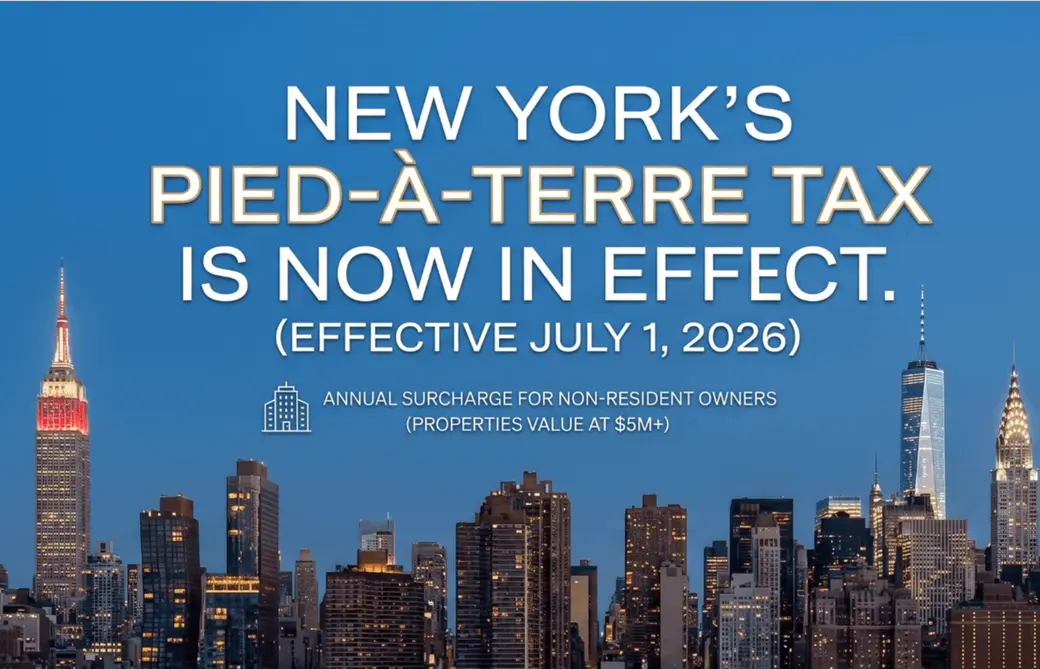
Escaping the Valuation Trap: How New York’s New Luxury Surcharge Shifting Capital to Stable Midwestern Assets
Word Count: 518 words | Estimated Read Time: 2 minutes
New York just crossed a line that wealthy buyers and the real estate industry have been watching for over a decade. Governor Kathy Hochul has signed off on a progressive annual surcharge explicitly targeting high-value secondary residences located within New York City, where the owner’s primary tax return goes elsewhere. Starting July 1, if you keep a luxury "foot on the ground" in Manhattan but claim Florida or Connecticut as home, you are looking at a recurring annual penalty that could easily push into six figures. It is no longer a one-time transaction cost; it is a permanent line item on the holding costs.
We closely watched a similar narrative play out right here in Chicago during the Bring Chicago Home debate. The push for a graduated transfer tax was a different mechanism, but the underlying sentiment was identical: targeting high-end real estate to solve structural municipal budget deficits. Chicago dodged that bullet at the ballot box. New York did not.
The immediate reaction from the ultra-high-net-worth space is predictable. Buyers at this level are highly educated, data-driven, and intensely sensitive to friction. When you change the rules of the game mid-stream, capital does not just sit there and absorb the blow—it moves. A recurring tax on an asset that sits empty for three-quarters of the year fundamentally alters the math of ownership.
But it is the mechanics of how New York is calculating this surcharge that exposes the true friction for buyers—and reveals the real story for our market.
The Facts of the Legislation
-
The Passing: The New York State Legislature officially passed the budget package late last night, and Governor Kathy Hochul signed it into law today (May 28, 2026).
-
The Target: It establishes an annual, recurring property tax surcharge on high-value secondary residences (one- to three-family homes, condos, and co-ops) located within New York City where the owner’s primary residence is outside the city.
-
The Threshold & Revenue: It explicitly targets properties with a market value of $5 million or more and is projected to generate roughly $500 million annually to help close NYC's budget deficit.
-
The Effective Date: It is moving incredibly fast, set to take effect on July 1, 2026.
Because New York City law historically values condos and co-ops based on an artificial "rental income" methodology rather than true market comparable sales, their official assessed values look shockingly low on paper. For example, a penthouse that commands a real-world $25 million purchase price might carry an official city assessed value of just $1.5 million. To circumvent this immediate loophole and capture their projected $500 million in annual revenue, lawmakers built a two-phase valuation trap.
For the first two fiscal years, the state is levying a staggering 4% to 6.5% annual tax surcharge on any condo or co-op with a city-assessed value of $1 million or more, which serves as the state’s proxy for a $5 million real-world valuation. By 2028, the city intends to transition to a true sales-comparable valuation system, adjusting the rates to a graduated 0.8% to 1.3% of actual market value.
While New York inventory faces an inevitable rush of valuation protests and administrative headaches for co-op boards, the shifting tides create clear opportunities for the Chicago luxury market.
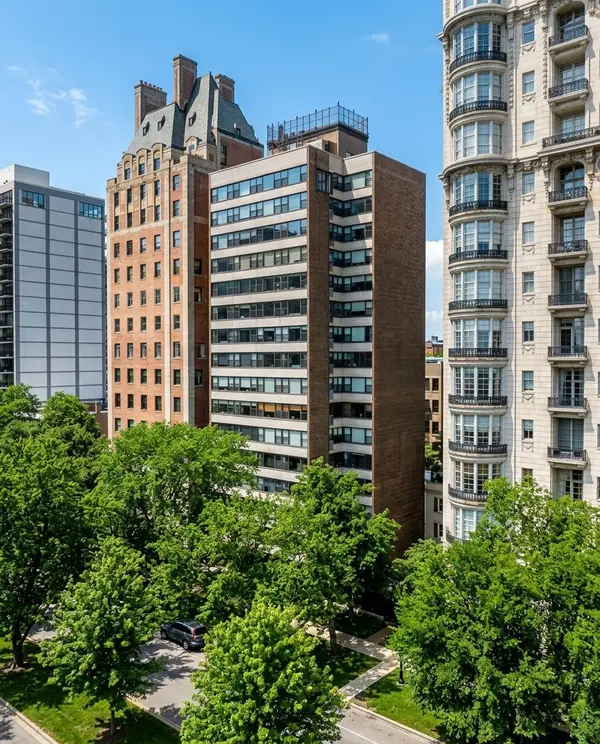
Our market has always been anchored by a distinct reality: better costs less here, and the fundamental value proposition is unmatched. When you look at the Gold Coast, Streeterville, or a full-floor residence at the St. Regis, the quality of construction, the architectural significance, and the lifestyle match for anything on the East Coast—at a fraction of the entry price and without a predatory tax structure waiting for non-residents.
In Chicago, luxury assessments and HOAs are understood as the cost of entry; they are justified by the world-class amenities and staffing required to maintain these assets. What buyers will not tolerate is an arbitrary fiscal penalty simply for the privilege of keeping a property in a city.
As the national landscape shifts, the Midwest becomes an increasingly attractive harbor for capital. Exclusivity and premium positioning are built on stability. Chicago offers that stability. Pricing remains a strategy, not an exercise in optimism, but sophisticated buyers are quickly realizing that this is a market where their dollar works significantly smarter.
Craig Hogan Hogan Zavala Group Engel & Völkers Chicago
— Craig Hogan & Rudy Zavala
Hogan Zavala Group | Engel & Völkers Chicago
Details on the top 10 markets in Chicago are just a click away!
Categories
- All Blogs (130)
- Adaptive Reuse (2)
- Architecturally Significant (23)
- Architecture (59)
- Art (2)
- Art Collecting (2)
- Bespoke Lighting (2)
- Buena Park (1)
- buyer strategy (30)
- Career Moves (9)
- chandeliers, (1)
- Chicago HOA Fees (7)
- Chicago Luxury Real Estate (94)
- Chicago Property Taxes (4)
- closet design (2)
- Co-Ownership (3)
- Coffee (1)
- Condo Assessments (7)
- coop apartments (5)
- cooperative apartments (8)
- custom closet advice (1)
- Days on Market (16)
- Design (51)
- Fulton Market District (8)
- Gold Coast (25)
- Golden Visa Programs (10)
- Historic Homes (8)
- Hogan Zavala Group (60)
- Holiday Abroad (1)
- International Citizenship (15)
- International Real Estate (31)
- Kitchen Design (13)
- Lakeview (14)
- Legacy (3)
- LGBTQ Housing (2)
- LGBTQ+ (4)
- Lifestyle (78)
- Lighting (2)
- Lincoln Park (14)
- Loft Living (5)
- Lofts (5)
- Logan Square (4)
- loneliness & aging (2)
- Loop (2)
- Luxury Market Index (4)
- Marina Towers (4)
- Market Insights (17)
- Market Update (36)
- Mid Century (2)
- New East Side (1)
- Outdoors (5)
- Pacaso Vacation Homes (3)
- pied-à-terre (15)
- Puerto Vallarta (8)
- Puerto Vallarta Real Estate (9)
- Real Estate Agents Success (11)
- Real Estate Industry (30)
- Real Estate Legal Changes (5)
- Real Estate Transactions (7)
- ritual (4)
- River North (21)
- River West (14)
- Second Homes (9)
- Seller Strategy (28)
- Selling and Buying in Chicago (34)
- Senior Housing (2)
- Streeterville (15)
- Summer (7)
- Sustainability (7)
- Taxes (5)
- Thanksgiving Travel (1)
- The 606 (1)
- The Henrys (1)
- Travel (1)
- Trends (29)
- Trifecta (17)
- Uptown (2)
- video (1)
- video for real estate (2)
- Wellness (9)
- West Loop (9)
- Wheaton (1)
- Wicker Park | Bucktown (4)
- Wines for Summer (2)
Recent Posts






Craig Hogan | Rudy Zavala