
Editing Life: What Downsizing Really Means Today
Downsizing, Redefined: Editing Life, Not Just Moving
Word Count: ~1,050 • Read Time: 4–5 minutes
Editing life isn’t something we talk about enough, but we’re all doing it—whether we realize it or not.
After 30 years in real estate, I’ve walked into just about every version of it. People starting out with nothing. People in the middle, accumulating faster than they can keep up. And then the moment that eventually shows up for all of us… standing in a home filled with a lifetime of things and asking, what now?
I’ve hit that point myself. At 65, we recently downsized. Not theoretically. Not just advising from the sidelines, but actually doing it. And I can tell you, it’s different when it’s your own walls, your own closets, your own decisions. I struggled with it far too long as someone who collected far too much.
We’re not moving. We’re editing.
We tend to call it moving—moving up, moving on, moving out. But that’s not really what’s happening. What’s happening is editing.
You’re deciding what makes it into the next version of your life and what doesn’t. And most of what we’ve collected over time doesn’t make the cut. That’s the part people struggle with.
Change your mindset, change your space
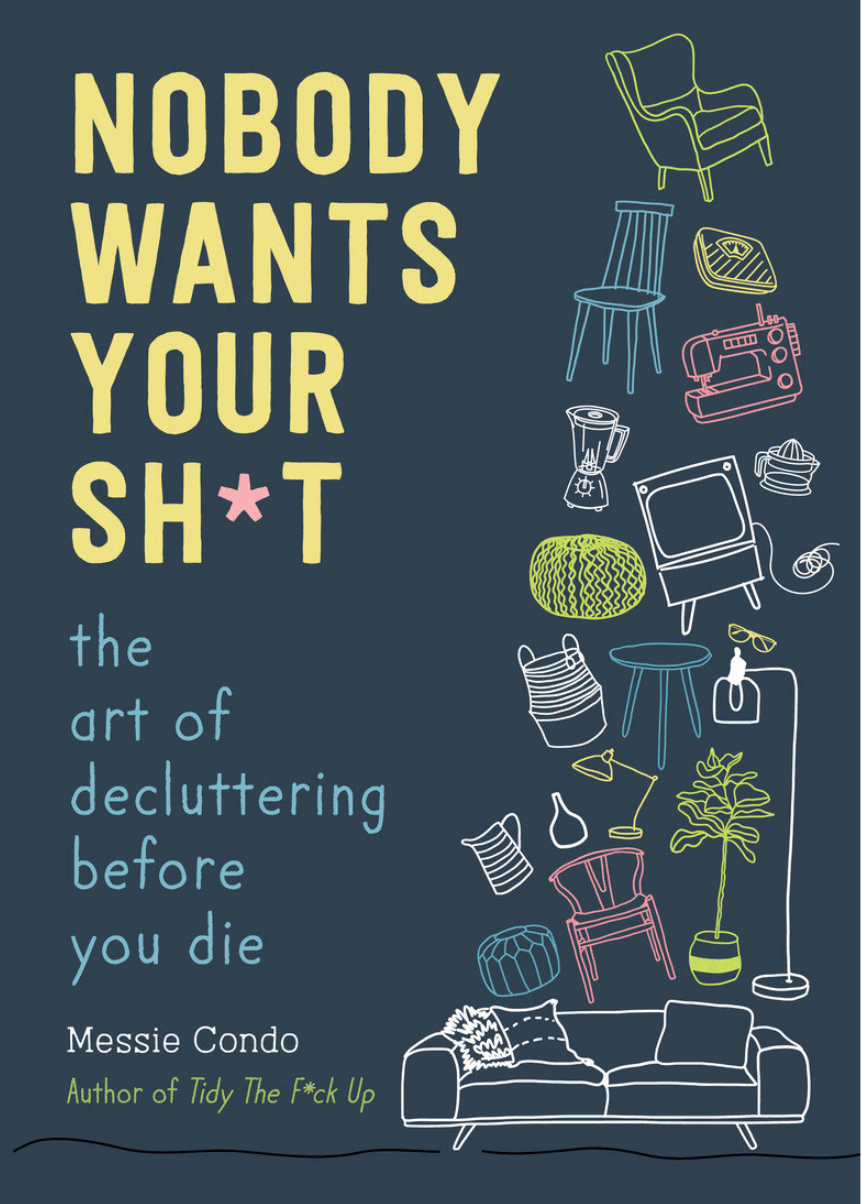
There’s a book out right now called Nobody Wants Your Sh*t. It’s blunt, but it lands because it’s true. Every day, we sit with people who genuinely believe their things will carry the same value to others that they do to them. They don’t. That china set, the furniture that’s been in the family forever, the pieces that “someone will want someday”—that’s not how it plays out.
Preparing to sell? The market doesn’t reward sentiment. Trust the process. There is more than enough data for us to say clearly, "let it go" and move on. Buyers today are editing too. They’re looking for simplicity, quality, things that feel current and intentional. Less is more has shifted from an idea to an expectation.
And yet, we hang on.
The market doesn’t reward sentiment. It rewards relevance.
Part of it is the story we tell ourselves. Part of it is avoidance. Because if you apply a simple filter—if you don’t touch it, see it, or use it regularly—it forces a level of honesty most people aren’t ready for. That list gets long fast.
Now and then, something surprises you. I worked with a woman who had become the family repository for mink coats. Six, maybe eight of them. No one wanted them. No one was wearing them. But she couldn’t let them go. We shifted the thinking and had them turned into pillows. Different sizes, beautifully done. Suddenly, they were the best pieces in the room. Everyone noticed them. Everyone wanted to know about them. She tells the story now like it was her idea, which is exactly how it should be.
There are moments where reinvention works. Fabric becomes upholstery. Pieces get reimagined. But most of it doesn’t. Most of it just needs to move on.
That’s where the right help matters. Firms like The Estate Edit are redefining what this process can look like. We hosted them recently at our Shop for a benefit sale, United in Generosity, and what they presented wasn’t just an estate sale. It was curated, intentional, and elevated—more editorial than transactional.
And then there’s Chicago Estate Advisors, who have taken it a step further. They’ve opened a location at Water Tower Place, and we’ve been there several times since it launched. It’s not what people expect when they think “resale or estate sale.” It’s a showroom—thoughtfully displayed, well merchandised, easy to engage with. It shifts the entire experience from liquidation to discovery. You start to see these pieces not as leftovers, but as selections—items that still have a place, just in a different home. For me, that was the shift. It wasn’t about things being gone. It was knowing they’d land somewhere better, without the pressure of wondering who in the family might take them—because the reality is, most of the time, they won’t.
It’s not about things being gone. It’s knowing they’ll land somewhere better.
Because this isn’t really about stuff. It’s about identity. It’s about the version of yourself that collected it all in the first place. Letting go of things forces you to acknowledge that you’re not that person anymore—and that’s where it gets uncomfortable.
But on the other side of it, something shifts. It’s lighter. Cleaner. You’re not surrounded by decisions you’ve been putting off. You’re not anchored to a look, a time, or a version of your life that no longer fits.
What made all the difference for us was using a few changes in thinking:
-
Design like a sailboat: Every inch matters. Function meets beauty.
-
Edit ruthlessly: Keep what brings you joy or earns its place. Let the rest go.
-
Create zones, not walls: Lighting, color, and layout define space—no drywall required.
-
Treat your home like a boutique hotel: Curated. Intentional. Effortless.
- Think automotive, marine and aircraft design. Everything is connected and has a specific purpose.
Karl Lagerfeld famously said, “The most beautiful house is always the next one.”
I don’t think that’s about real estate. I think it’s about evolution.
Because the best spaces I walk into today aren’t the ones filled with everything. They’re the ones where someone made clear decisions about what mattered—and had the discipline to leave the rest behind.
That’s editing. And the ones who embrace it don’t just move better. They live better.
You may also enjoy:
Living in smaller spaces: The Rules Have Changed
— Craig Hogan & Rudy Zavala
Hogan Zavala Group | Engel & Völkers Chicago
FOLLOW OUR YOUTUBE CHANNEL HERE
Details on the top 10 markets in Chicago are just a click away!
Categories
- All Blogs (130)
- Adaptive Reuse (2)
- Architecturally Significant (23)
- Architecture (59)
- Art (2)
- Art Collecting (2)
- Bespoke Lighting (2)
- Buena Park (1)
- buyer strategy (30)
- Career Moves (9)
- chandeliers, (1)
- Chicago HOA Fees (7)
- Chicago Luxury Real Estate (94)
- Chicago Property Taxes (4)
- closet design (2)
- Co-Ownership (3)
- Coffee (1)
- Condo Assessments (7)
- coop apartments (5)
- cooperative apartments (8)
- custom closet advice (1)
- Days on Market (16)
- Design (51)
- Fulton Market District (8)
- Gold Coast (25)
- Golden Visa Programs (10)
- Historic Homes (8)
- Hogan Zavala Group (60)
- Holiday Abroad (1)
- International Citizenship (15)
- International Real Estate (31)
- Kitchen Design (13)
- Lakeview (14)
- Legacy (3)
- LGBTQ Housing (2)
- LGBTQ+ (4)
- Lifestyle (78)
- Lighting (2)
- Lincoln Park (14)
- Loft Living (5)
- Lofts (5)
- Logan Square (4)
- loneliness & aging (2)
- Loop (2)
- Luxury Market Index (4)
- Marina Towers (4)
- Market Insights (17)
- Market Update (36)
- Mid Century (2)
- New East Side (1)
- Outdoors (5)
- Pacaso Vacation Homes (3)
- pied-à-terre (15)
- Puerto Vallarta (8)
- Puerto Vallarta Real Estate (9)
- Real Estate Agents Success (11)
- Real Estate Industry (30)
- Real Estate Legal Changes (5)
- Real Estate Transactions (7)
- ritual (4)
- River North (21)
- River West (14)
- Second Homes (9)
- Seller Strategy (28)
- Selling and Buying in Chicago (34)
- Senior Housing (2)
- Streeterville (15)
- Summer (7)
- Sustainability (7)
- Taxes (5)
- Thanksgiving Travel (1)
- The 606 (1)
- The Henrys (1)
- Travel (1)
- Trends (29)
- Trifecta (17)
- Uptown (2)
- video (1)
- video for real estate (2)
- Wellness (9)
- West Loop (9)
- Wheaton (1)
- Wicker Park | Bucktown (4)
- Wines for Summer (2)
Recent Posts










Craig Hogan | Rudy Zavala